If You Don’t See Me, You Can’t Hurt Me: The Problem with Trying to Be Low Maintenance

Sometimes trauma doesn’t teach us to fight. Sometimes it teaches us to disappear.
If you don’t see me, you can’t hurt me.
If I don’t ask for anything, you can’t tell me I’m too needy.
If I don’t get angry, I can’t make anyone angry with me.
If I don’t complain, maybe nobody will get tired of me.
If I can just be easy enough, quiet enough, understanding enough, forgiving enough—maybe I’ll be safe.
And honestly? It makes sense. When you’ve learned that being visible comes with consequences, making yourself smaller can feel like a very reasonable survival strategy.
The problem is that what once helped you survive can eventually make it very difficult to live.
Becoming low-maintenance
Maybe you’ve become really good at being “easy.”
You’re fine.
It’s okay.
You understand why they did it.
You know they’re stressed.
They didn’t mean to yell.
They had a hard childhood.
They’ve been through a lot.
They’re under a lot of pressure.
They’re not really like that.
And maybe all of those things are true.
Maybe they didn’t mean to yell.
Maybe they are stressed.
Maybe they did have a terrible childhood.
But there is something I want you to consider: Understanding why someone hurt you doesn’t require you to pretend that it didn’t hurt.
You can understand someone’s behavior and still acknowledge its impact on you. You can have compassion for someone’s history without volunteering your own nervous system as the place where they get to unload it. You can believe that someone loves you and still recognize that something they did wasn’t okay for you. And you can love someone without making yourself disappear to make the relationship work.
When being invisible becomes a habit
The tricky thing about making yourself small is that eventually you may stop noticing how small you’ve become. You stop asking what you want because you’re so focused on what everyone else needs. You stop expressing disappointment because you don’t want to be difficult. You apologize for being upset before anyone has even asked you what’s wrong. You explain away your own pain. You second-guess your reactions. You wonder if you’re being too sensitive. You tell yourself that other people have it worse.
And sometimes you don’t even realize you’re doing it.
You’ve just become incredibly practiced at abandoning yourself before anyone else gets the opportunity.
That’s a painful sentence.
But I think it’s an important one.
Because self-abandonment can look an awful lot like kindness. It can look like empathy. It can look like being the “bigger person.” It can look like being understanding. It can even look like being incredibly emotionally intelligent.
But if your understanding of everyone else consistently requires you to stop understanding yourself, something is missing.
You don’t have to prove that it was bad enough
One of the things trauma can do is convince us that our feelings require a courtroom. We think we need evidence. Was it really that bad? Did they actually mean to hurt me? Was I justified in being upset? Was their intention malicious? Am I overreacting? Would somebody else have been bothered by this?
But your nervous system doesn’t need a prosecutor’s closing argument before you’re allowed to acknowledge that something hurt.
You don’t have to prove malicious intent. You don’t have to prove that someone is a bad person. You don’t even have to decide what their behavior “means.” You can simply say:
That hurt me.
And that’s information.
This is where self-compassion gets really hard
We talk a lot about self-compassion as though it’s simply being nicer to yourself. But for someone who learned to survive by becoming small, self-compassion can feel surprisingly threatening. Because self-compassion asks you to notice yourself. It asks you to have needs. It asks you to take your feelings seriously. It asks you to stop automatically explaining them away.
And if you’ve spent years believing that being seen makes you vulnerable, that can feel incredibly uncomfortable. You may even feel selfish. You may wonder whether you’re becoming demanding. You may worry that you’re making everything about yourself.
But there is a difference between making everything about yourself and including yourself in the equation.
That’s a difference worth learning.
Compassion doesn’t have to disappear. It just needs to include you.
I don’t want you to swing from:
“Everyone else’s feelings matter and mine don’t”
to:
“Only my feelings matter.”
That’s not healing.
Healing is learning:
Their feelings matter. And mine do, too.
Their history matters.
And my experience matters.
Their intentions matter.
And the impact on me matters.
They deserve compassion.
And so do I.
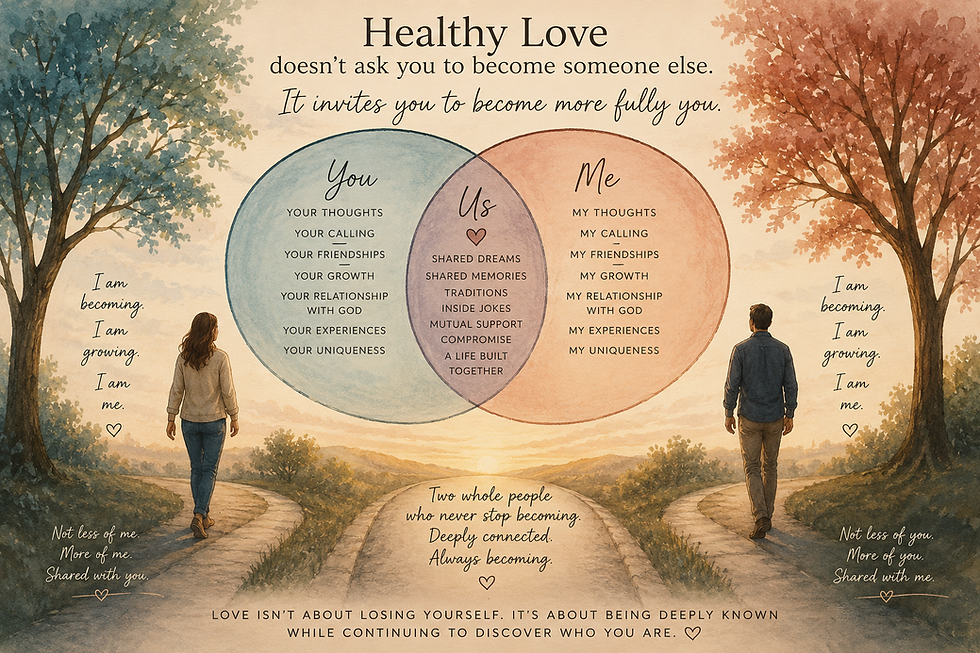
This is not about becoming less understanding. It’s about becoming understanding in both directions.
You are allowed to take up some space
Maybe the goal isn’t to become the loudest person in the room. Maybe it’s not about demanding that everyone accommodate you. Maybe it’s simply learning to stop automatically removing yourself from the room.
To say:
I don’t like that.
That hurt.
I need something different.
I’m not comfortable with this.
I need some reassurance.
I disagree.
I’m angry.
I’m disappointed.
I want something.
Those statements can feel enormous when you’ve spent your life trying not to be a burden. But having needs doesn’t make you a burden. Having feelings doesn’t make you difficult. Being affected by someone’s behavior doesn’t make you dramatic. And taking up space doesn’t mean you’re taking space away from someone else. There is room for both of you.
And this is where real healing begins
You don’t have to stop caring about other people.
You don’t have to stop understanding why they behave the way they do.
You don’t have to become hard.
You don’t have to become suspicious.
You don’t have to stop giving people grace.
But you do have to start giving yourself some of that grace, too.
Because if you’re constantly making yourself smaller so that everyone else can be comfortable, eventually there isn’t enough of you left to build a life around. And healing isn’t becoming someone who never gets hurt. It’s becoming someone who can get hurt and still remain present with themselves.
Someone who can say:
I see what happened. I see what I feel. I see what I need. And I’m not going to disappear just because someone else might not like it.
Maybe that’s what it means to finally feel safe enough to be seen. Not because nobody can hurt you anymore.
But because you know you won’t abandon yourself if they do.